After nearly a decade of transformative language revitalization work, Michigan State University’s Center for Language Teaching Advancement (CeLTA) in the College of Arts & Letters has completed a landmark initiative strengthening and expanding access to less commonly taught and Indigenous language education at dozens of universities and in communities across the United States and Canada.
From 2016 to 2025, the Less Commonly Taught and Indigenous Languages Partnership, funded by the Mellon Foundation, leveraged the established strengths of the Big Ten Academic Alliance (BTAA) to collaboratively develop sustainable models for less commonly taught language (LCTL) instruction grounded in proficiency-oriented best practices.


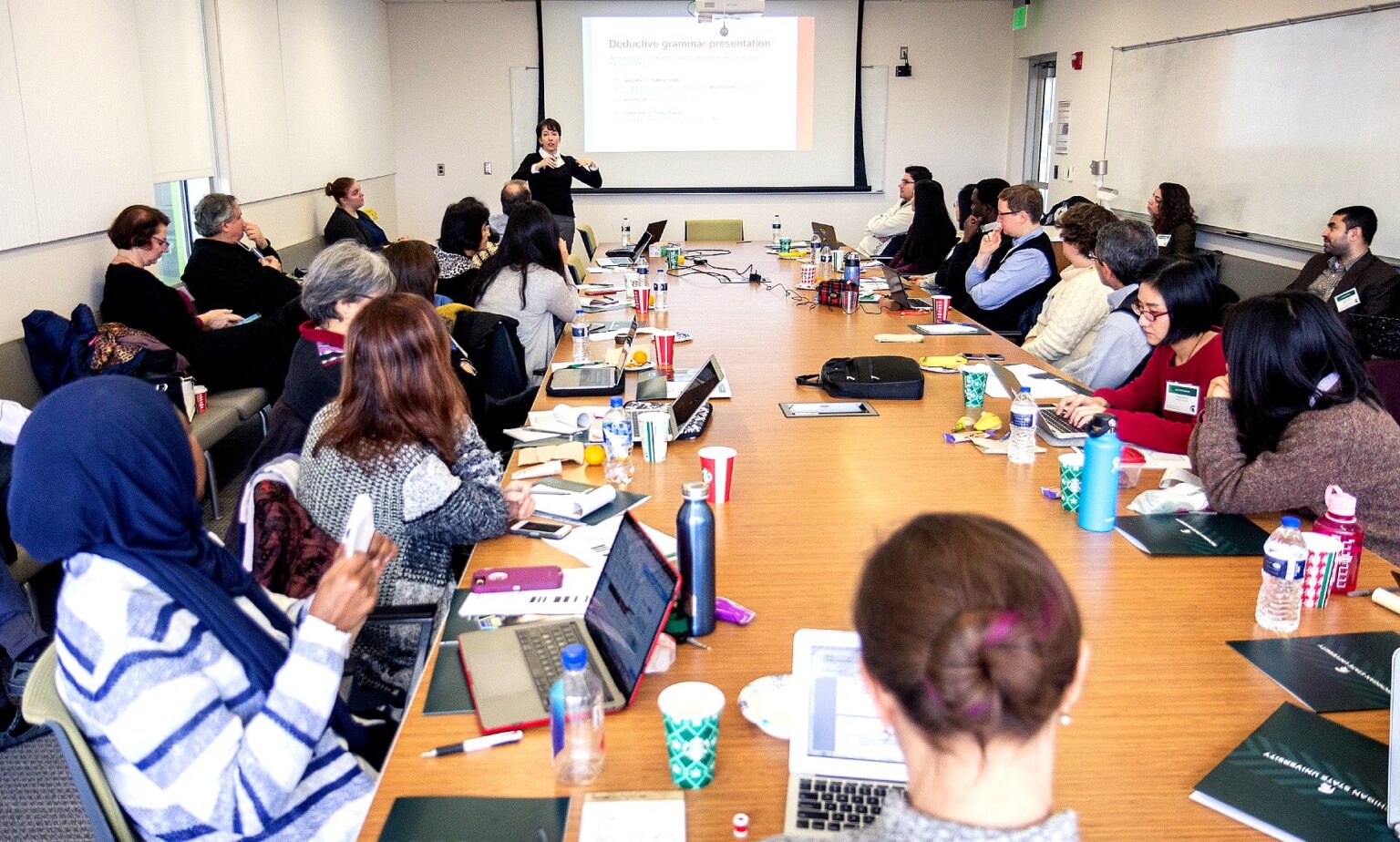
Overall, the $3.5 million grant supported efforts to create and catalogue extensive open-access resources, provide professional development to hundreds of instructors of at least 36 languages, establish new cross-institutional collaborations nationwide, and fund 19 Indigenous community language revitalization projects across five states and Canada.
The two-phase project included research in LCTL proficiency assessment, goal setting, curricular and technological innovations, as well as teacher education and professional development. The grant also supported in-person teacher training workshops and the creation of the Online Language Teaching (OLT) Initiative. This foundational OLT course, Fundamentals of Online Language Teaching, proved especially crucial during the COVID-19 pandemic when instructors suddenly needed a resource to learn how to teach remotely. Further development of advanced OLT courses took place throughout the project and still continue today.
“From the beginning, this grant was animated by a commitment to meaningful collaboration. Its success has been rooted in reciprocal and respectful relationships cultivated with Anishinaabe communities and between universities across the Big 10 Academic Alliance.”
Dr. Christopher P. Long, Principal Investigator
Another initiative, the annual Shared Less Commonly Taught Languages Symposium, co-organized with the University of Chicago, attracted more than 80 institutions and organizations and drew more than 620 attendees from 2016 to 2025.
Christopher P. Long, former Dean of MSU’s College of Arts & Letters and now Provost and Senior Vice President and Collins Professor of Philosophy at the University of Oregon, served as the Principal Investigator (PI) for the project, with a number of people serving as co-Investigators and helping to inspire and guide work on the project over the years.

“From the beginning,” Long said, “this grant was animated by a commitment to meaningful collaboration. Its success has been rooted in reciprocal and respectful relationships cultivated with Anishinaabe communities and between universities across the Big 10 Academic Alliance.”
As co-PI and Senior Associate Dean in MSU’s College of Arts & Letters, Professor Sonja Fritzsche oversaw grant work during phase two.
“It has truly been a life-changing experience to work with so many talented individuals fully dedicated to the sharing of essential linguistic and cultural knowledge,” Fritzsche said. “What our field calls ‘less commonly taught languages’ are actually some of the most commonly spoken languages in the world.”
“It has truly been a life-changing experience to work with so many talented individuals fully dedicated to the sharing of essential linguistic and cultural knowledge.”
Dr. Sonja Fritzsche, co-Principal Investigator
Grant personnel Koen Van Gorp, Luca Giupponi, and Emily Heidrich Uebel facilitated inter-institutional working groups that developed new curricular materials in Arabic, Hebrew, Hindi, Portuguese, Russian, Swahili, Vietnamese, and Western Armenian. New textbooks produced through the initiative include: Plural Portugues Pluricentrico workbook, Intermediate Vietnamese, Embrace Advanced Arabic, Diverse Russian: A Multicultural Exploration, and You & I: Western Armenian OER.
“These materials continue to have a ripple effect around the globe, as evidenced in a recent unprompted email from someone describing how one of our project’s textbooks has impacted their language learning journey, which in turn has helped strengthen their relationship with their partner and family,” said Heidrich Uebel, who came to MSU in 2016 as the grant’s project manager.
“These materials continue to have a ripple effect around the globe, as evidenced in a recent unprompted email from someone describing how one of our project’s textbooks has impacted their language learning journey…”
Emily Heidrich Uebel, Grant/Project Manager for the LCTL and Indigenous Languages Partnership
Grant co-PI and CeLTA Director Felix Kronenberg said: “Challenges of this scale can only be met through true collaboration. None of us could have done this alone — it takes many institutions, communities, and voices working together to make language learning accessible and sustainable.”
Advancing Indigenous Language Revitalization
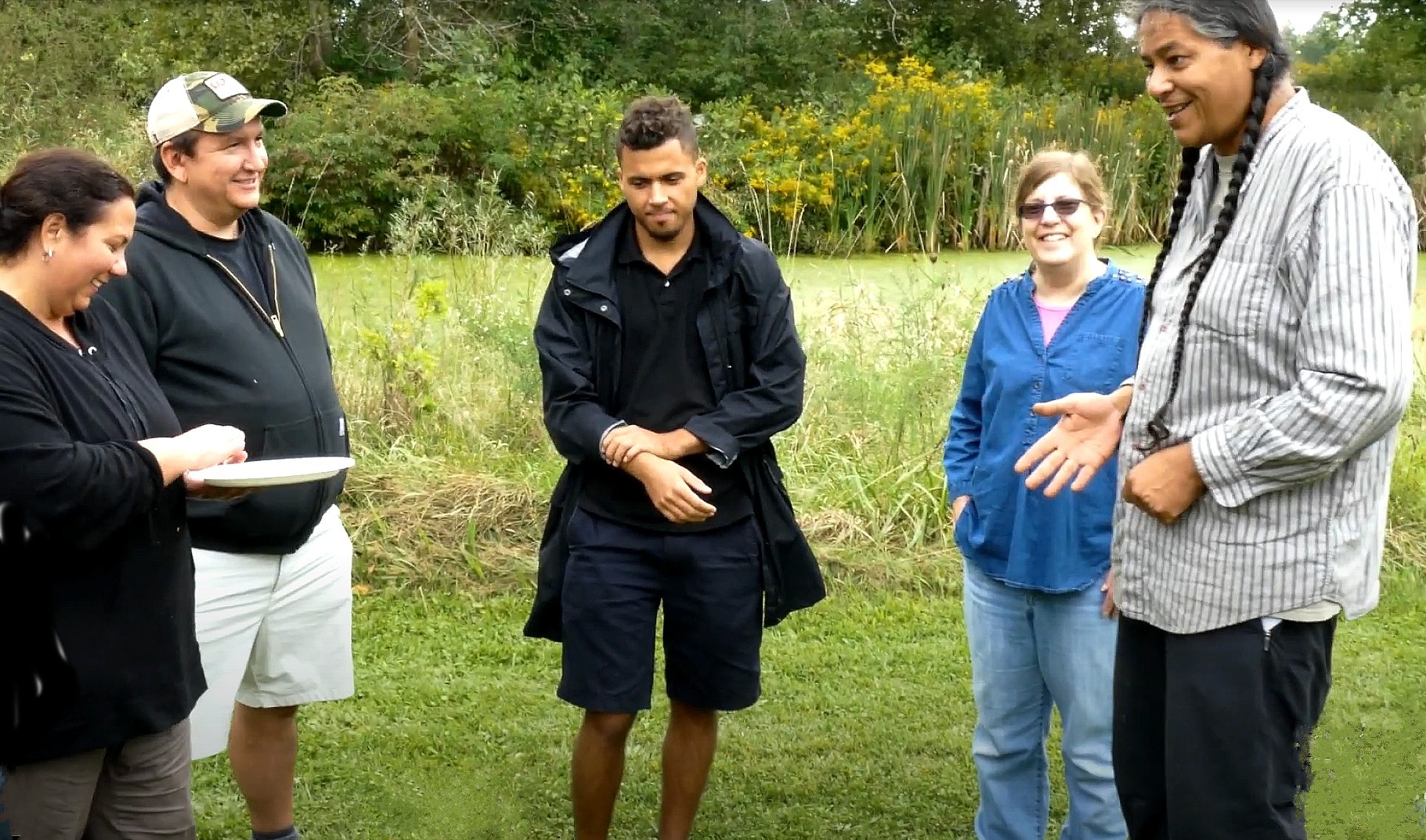
Phase two of the project added a new Anishinaabemowin (Ojibwe and Bodéwadmi) research initiative and teaching framework developed in reciprocal and restorative partnership with Anishinaabe communities and institutions across the Big Ten and Great Lakes region.
“This grant allowed me to visit Anishinaabe communities and language events,” said Ellie Mitchell, Indigenous Language Outreach Coordinator, who joined the team in 2019. “That made a significant impact on the work, by allowing a community member to do the tasks of relationship building. Outreach is vital for collaboration with tribal nations.”
Kristin Arola, Professor and Director of MSU’s American Indian and Indigenous Studies Program, noted that the project aligns closely with MSU’s land-grant mission.
“At its core, this project supported our land-grant mission — extending university resources into communities across the Great Lakes and investing in Indigenous language revitalization,” she said. “It represents a meaningful step toward returning support to Anishinaabe communities whose lands sustain our institutions.”

Guided by the Wewaawindamojig (Indigenous Advisory Board), this portion of the grant funded 19 community language revitalization projects across Illinois, Michigan, Minnesota, Oklahoma, Wisconsin, and into the Great Lakes region of Canada. Subawards funded language tables, games and events, language videos, children’s book translations, an app to encourage digital storytelling, priceless Elder stories recordings, and the creation of other “heritage items” for digital archives, just to name a few examples. Additional digital projects include expansion of both the Ojibwe.net online language learning resource and the creation of Native @ MSU.
For more information about this community-based work, read “Navigating Change in Indigenous Language Revitalization Grant Work” written by grant personnel Kristin Arola, John-Paul Chalykoff, Sonja Fritzsche, Ellie Mitchell, and Emily Heidrich Uebel that was published in Collaborations. A Journal of Community-Based Research and Practice.
Global Impact and Lasting Legacy
The $3.5 million Mellon Foundation grant funded important research and knowledge dissemination, heavily favoring open access publications whenever possible. Grant personnel delivered more than 58 presentations worldwide and published numerous articles, book chapters, and a co-edited volume. The open-access volume, Sharing Less Commonly Taught Languages in Higher Education, Collaboration and Innovation, co-edited by Emily Heidrich Uebel, Angelika Kraemer, and Luca Giupponi (2023), was both inspired by and highlights the lessons learned during this grant, including inter-institutional collaboration and LCTL advocacy.
Over nearly 10 years, the grant funded thousands of hours of work, hundreds of meetings, dozens of collaborations, and one amazing journey. As the initiative concludes, the team wishes to extend its gratitude, Miigwetch, to all its partners across the state of Michigan, the Great Lakes region, in the Big Ten Academic Alliance, and around the country.