Julia Bolash’s path into design started with fonts.
“I was big into graphic design in high school, and so I took all of the graphic design electives in my school, mostly because I love fonts,” said Bolash who is from Rolling Meadows, Illinois, and graduated from Rolling Meadows High School .

As her interest in design grew, so did her curiosity about what makes design effective — not just visually, but in how it serves the people using it. That led her to user experience design and, eventually, to the Experience Architecture (XA) program at Michigan State University.
“MSU’s XA program is in the College of Arts and Letters, so it’s very human-focused and not as focused on how can we make things technically possible, but changing it to how can we make what’s technically possible support the people who need it,” she said.
“MSU’s XA program is in the College of Arts and Letters, so it’s very human-focused and not as focused on how can we make things technically possible, but changing it to how can we make what’s technically possible support the people who need it.”
Julia Bolash
Now a junior studying Experience Architecture with minors in Graphic Design and Museum Studies and a member of the College of Arts and Letters Citizen Scholars program, Bolash has quite the resume. She recently joined the College of Arts and Letters Accessibility and Inclusion Team to help with accessibility reviews of D2L courses, co-founded and leads the Spartan Printing Association, serves as a Co-Director of the MSU Designathon, and facilitates conversations about artificial intelligence as a CoLaborator at the MSU Museum.
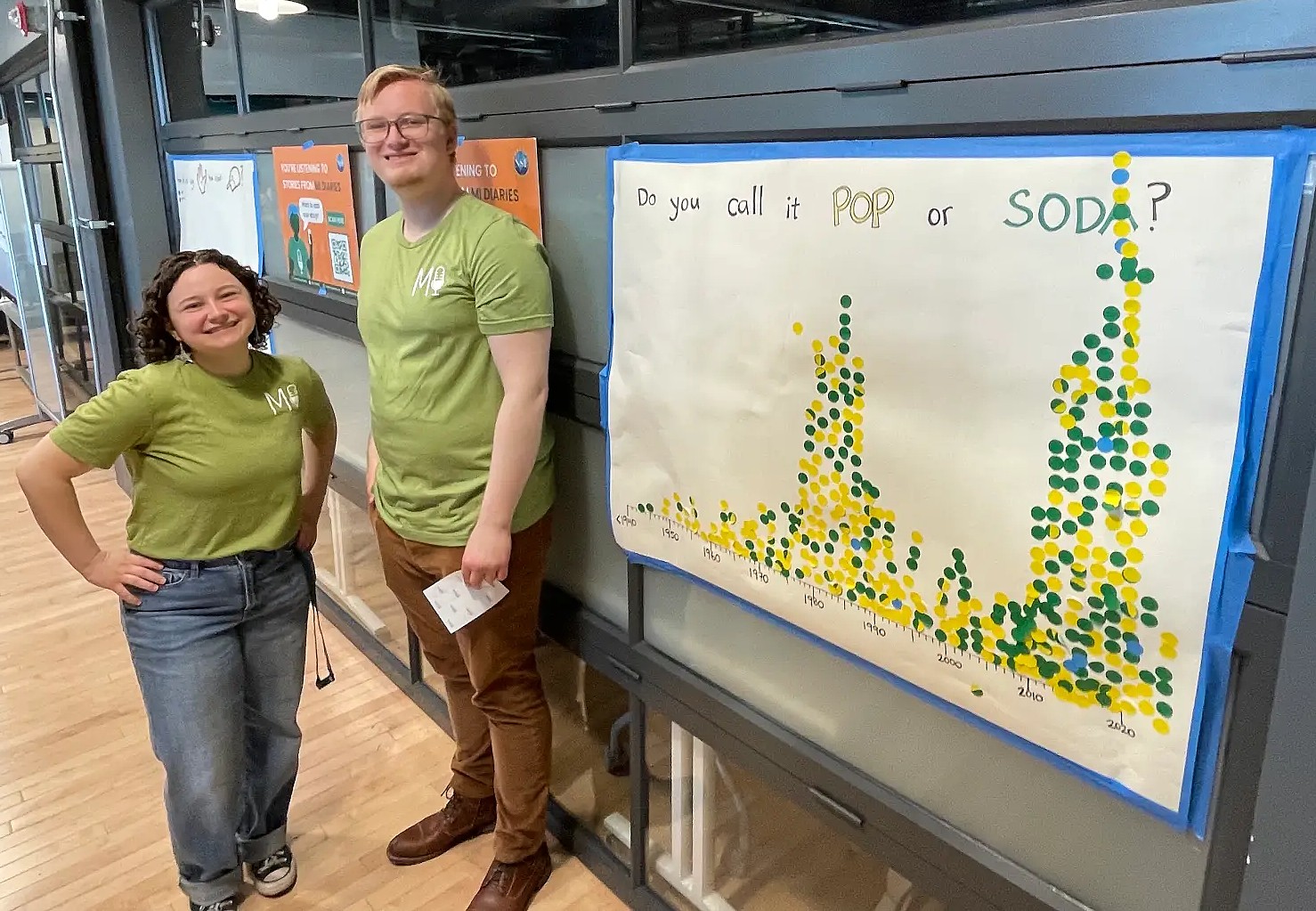
This past summer, she studied abroad in London and Edinburgh through the Digital Humanities program. She previously spent two years as a professorial assistant with MI Diaries, a sociolinguistics research project, and worked as a user experience researcher for iTeach.
A Basement Full of 1920s Type
The Spartan Printing Association grew out of a set of 1920s printing presses in the basement of Snyder-Phillips Hall.

During her first weeks on campus, Bolash met fellow College of Arts and Letters student Haley Asai through the Honors College, and Asai encouraged her to attend a Thursday night letterpress workshop led by printing instructor Arie Koelewyn, who has been printing for 40 years and teaches anyone who walks in. For a while, Bolash and Asai were the only two students who came.
“It’s a very tactile art form. You’re doing every little part of the process kind of tediously,” Bolash said. “You’re physically setting pieces of metal type into words and sentences, and then locking it up in a form. It’s not the kind of thing that has really any instant gratification, but I feel like people are very proud when they figure out how to make something work and then how to run the press.”
For Bolash, that slow, hands-on work connects directly to what she learns in class. “I’m learning Adobe software and Figma in my classes, but I’m also learning to print the way I would have 100 years ago if I was typesetting for a newspaper,” she said. “And it’s kind of all one string of communication media.”
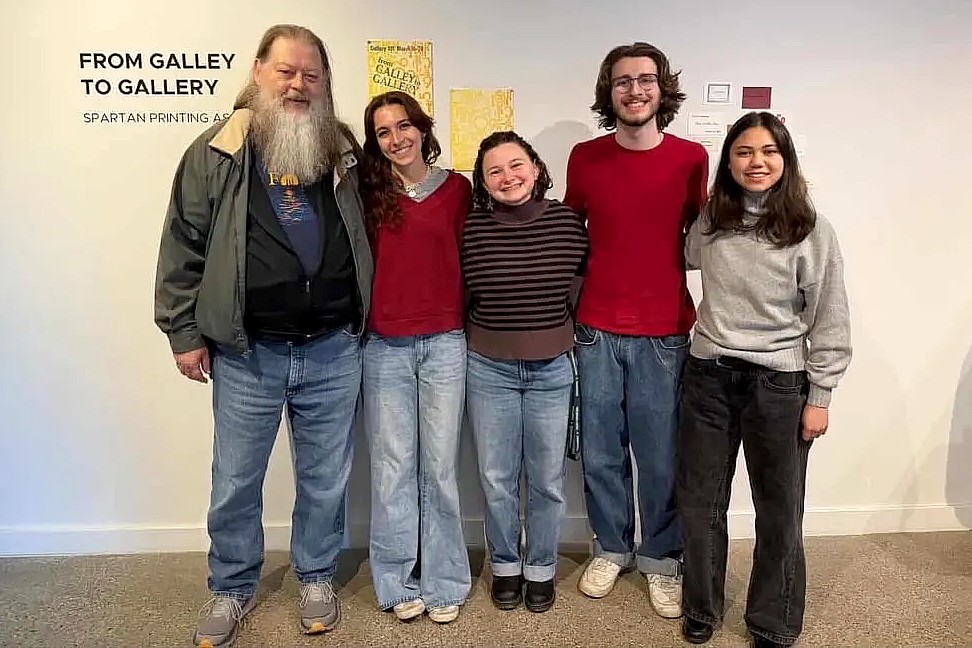

That interest in preserving the craft eventually led Bolash to pursue a Museum Studies minor.
“My interest in museums sparked from wanting to preserve things like that so that other people can learn those kinds of things,” Bolash said.
Bolash and Asai gathered more students interested in the letterpress craft and registered the Spartan Printing Association as a student organization at the beginning of last year. Bolash estimates the club has taught between 40 and 50 students how to print, which she called “probably the coolest thing that I’ve ever done in my life.”
Community, Accessibility, and Design
Bolash recently joined the College of Arts and Letters Accessibility and Inclusion team and is helping conduct accessibility reviews of D2L courses with Scott Schopieray, Assistant Dean of Academic Technology and Scholarly Engagement. The reviews start with a score generated by the platform for each course, which does not always translate into action.
“Professors get an accessibility score on their back end and don’t always know how to interpret that in terms of what they need to do to make their classes more accessible for students,” Bolash said.
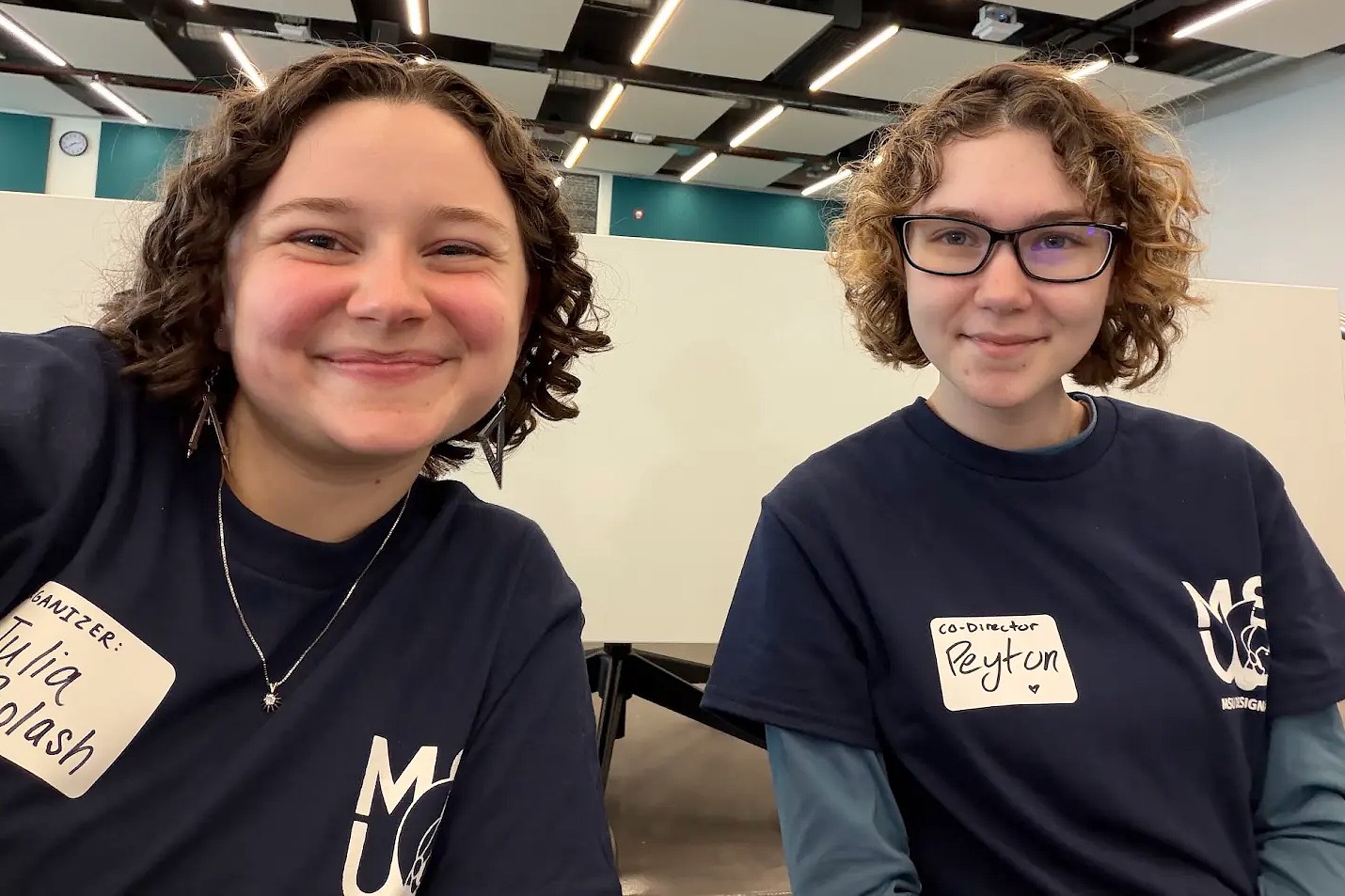
As a CoLaborator at the MSU Museum, Bolash works with the Reality Check exhibit, an open-call exhibition of work by artists using artificial intelligence to comment on its effects.
“My job is to help guide conversations and get people critically thinking about how artificial intelligence might be used,” Bolash said. “Should it be regulated? Do people think it’s ethical, helpful, harmful? The museum doesn’t have a stance that we’re trying to push, but just trying to get people talking about it.”
As a Co-Director of the MSU Designathon, Bolash helps run a 24-hour design challenge built around speakers, workshops, and open-ended prompts on issues like sustainability, accessibility, and education. Participants choose their own medium, and last year’s event drew students from across campus.
“The goal is to create a community space for people who like design at MSU, because there isn’t one cohesive community necessarily,” Bolash said.
London, Edinburgh, and What Comes Next
This past summer, Bolash studied abroad through the Digital Humanities program’s digital culture course in London and Edinburgh. During the program, she visited galleries, libraries, archives, museums, and theaters and met with archivists and curators.
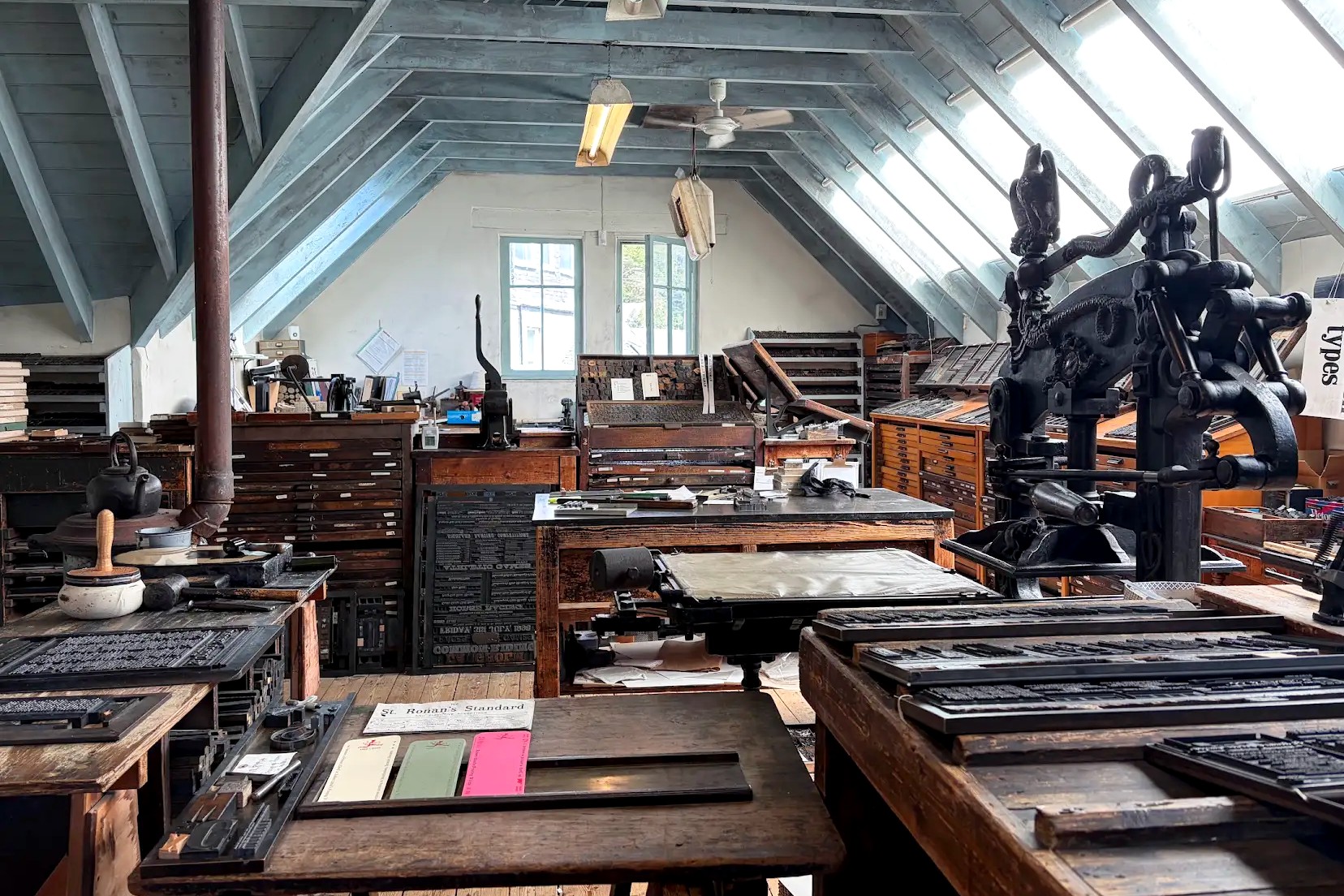
“The more that I was able to see different institutions and how they were run,” Bolash said, “the more I could see myself being a part of an archival institution or designing museum exhibits.”
She currently is considering graduate programs, possibly in museum or library science, though she has not settled on a direction.
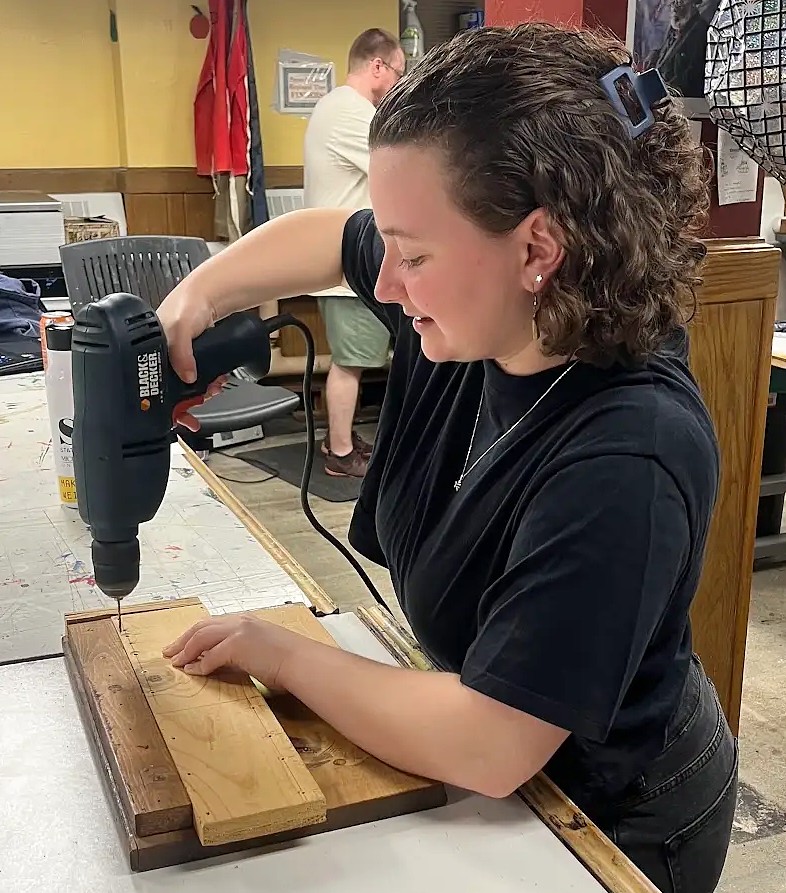
“I definitely don’t want to stop learning,” she said. “I’m someone who has historically been known to have a small, tight comfort zone. And so everything I do is an intentional choice of deciding, ‘You know what? I am going to do that. I’m going to take the risk and attend that meeting, or I’m going to go up and talk to my professor after class.’”
That willingness to step outside her comfort zone is something Bolash encourages other students to embrace.
“A lot of the things that I do now are because I sent a follow-up email, or I went up and introduced myself to someone, or I showed up to a meeting and even if I was one of two people there, I was very eager and kept going,” she said. “And now I lead multiple groups and I have a very full schedule, but I wouldn’t have it any other way.”


